DESU® Series Evaluation Based on Wet/Dry/Direct Compression
1. Introduction
Oral solid dosage form preparation processes mainly include wet granulation, dry granulation, and direct compression, with significantly different excipient performance requirements for different processes. Wet granulation requires excipients with good water absorption and granulation properties; dry granulation requires excipients that maintain good flowability and compressibility after being compressed into granules; direct compression imposes higher requirements on excipient flowability and compactibility. DESU® Microcrystalline cellulose (MCC), as a core pharmaceutical microcrystalline cellulose excipient for tablets, shows obvious differentiated characteristics in process adaptability among different grades.
DESU® microcrystalline cellulose series covers DESU® Microcrystalline cellulose PH-101, DESU® Microcrystalline cellulose PH-102, DESU® Microcrystalline cellulose PH-200, and other grades, each optimized for performance targeting different formulation processes. DESU® MCC PH-101 has a finer particle size, suitable for wet granulation, dry granulation, and direct compression processes; DESU® MCC PH-102 is a commonly used grade, balancing flowability and compactibility, suitable for direct compression; DESU® MCC PH-200 is a large particle size grade with super flowability, ideal for high-speed direct compression processes. This study establishes excipient selection strategies under different process conditions through systematic formulation process evaluation, providing scientific basis for process development and excipient selection by formulation companies.
2. Experimental Methods
2.1 Wet Granulation Process Evaluation
Atorvastatin calcium tablets were used as model drugs, using wet granulation and fluid bed drying process. Formulation composition: Atorvastatin calcium 10.0%, MCC 20.0% (Microcrystalline cellulose pharmaceutical grade), Lactose 68.0%, Calcium carbonate 10.0%, Croscarmellose sodium 2.0%, Hydroxypropyl cellulose 5.0%(binder).
Process flow: Premixing→ Granulation(spraying 5% hydroxypropyl cellulose aqueous solution)→Fluid bed drying→Sizing→Final blending→Compression. Three main compression pressure gradients were set, and tablet hardness, disintegration time, and dissolution profile were measured.
2.2 Dry Granulation Process Evaluation
Apixaban tablets were used as model drugs, using dry granulation and compression process. Formulation composition: Apixaban 5.0%, MCC 20.0%, Lactose 72.0%, Crospovidone 2.0%, Sodium stearyl fumarate 1.0%.
Process flow: Premixing→ Dry granulation(roller speed 2.0 rpm, hydraulic pressure 50 bar)→ Sizing→ Final blending→ Compression. Granule flowability, tablet hardness, disintegration time, and content uniformity were measured.
2.3 Direct Compression Process Evaluation
Amlodipine besylate tablets were used as model drugs, using powder direct compression process. Formulation composition: Amlodipine besylate 5.0%, MCC 25.0%, Lactose 68.0%, Croscarmellose sodium 1.5%, Magnesium stearate 0.5%.
Process flow: Powder mixing→ Direct compression. Multiple main compression pressure gradients were set, and blend flowability, tablet weight variation, hardness, friability, and disintegration time were measured.
3. Results and Discussion
3.1 MCC Selection in Wet Granulation Process
During wet granulation, MCC's water absorption and granulation properties are key performance indicators. Table 1 shows the performance comparison of MCC PH-101 from different sources in atorvastatin calcium tablet wet granulation process.
Table 1 Performance Evaluation of Atorvastatin Calcium Tablets (Wet Granulation)
| Evaluation Item |
DESU® MCC PH-101 |
Asian Brand |
European Brand |
American Brand |
| Compressibility Ranking |
Best |
Second best |
Third |
Fourth |
| Disintegration Performance |
Good |
Good |
Good |
Good |
| Dissolution Curve Similarity (f2) |
>50 |
>50 |
>50 |
>50 |
In atorvastatin calcium tablet studies, DESU® MCC PH-101 showed excellent compressibility, with the highest tablet hardness under the same main compression pressure. This is attributed to DESU® MCC PH-101's finer particle size (D50 approximately 50 um) and higher specific surface area, which can form more uniform granule structures with water-soluble binders during wet granulation, thus showing better compactibility during compression. All sources met requirements for dissolution curve similarity(f2>50), indicating quality equivalence.
Selection recommendation: For wet granulation processes, DESU® MCC PH-101 is preferred, as its fine particle size characteristics are beneficial for granulation and compression compactibility.
3.2 MCC Selection in Dry Granulation Process
Dry granulation process imposes dual requirements on MCC flowability and compressibility. Table 2 shows the performance comparison of MCC PH-102 in apixaban tablet dry granulation process.
Table 2 Performance Evaluation of Apixaban Tablets (Dry Granulation)
| Evaluation Item |
DESU® MCC PH-102 |
Asian Brand |
European Brand |
American Brand |
| Compressibility Ranking |
Second best |
Best |
Third |
Fourth |
| Disintegration Performance Ranking |
First |
First |
Third |
Third |
| Content Uniformity (A+2.2S) |
<5 |
<5 |
<5 |
<5 |
In apixaban tablet studies, DESU® MCC PH-102 showed outstanding disintegration performance, comparable to Asian Brand and superior to European and American Brands. After dry granulation, granule density increases and lubricant sensitivity differences are diminished, with content uniformity of tablets prepared with four MCC products meeting requirements(A+2.2S<5). Notably, dry granulation process can effectively reduce MCC sensitivity to lubricants and improve process robustness.
Selection recommendation: For dry granulation processes, DESU® MCC PH-102 or DESU® MCC PH-112 can be selected, both having advantages in disintegration performance; for moisture-sensitive drugs (MCC for moisture-sensitive API formulations), DESU® MCC PH-112 is preferred (loss on drying<0.6%, Low moisture microcrystalline cellulose≤1.5%).
3.3 MCC Selection in Direct Compression Process
Direct compression process imposes the highest requirements on MCC flowability and compactibility. Figure 1 shows the performance positioning of different MCC grades in direct compression processes.
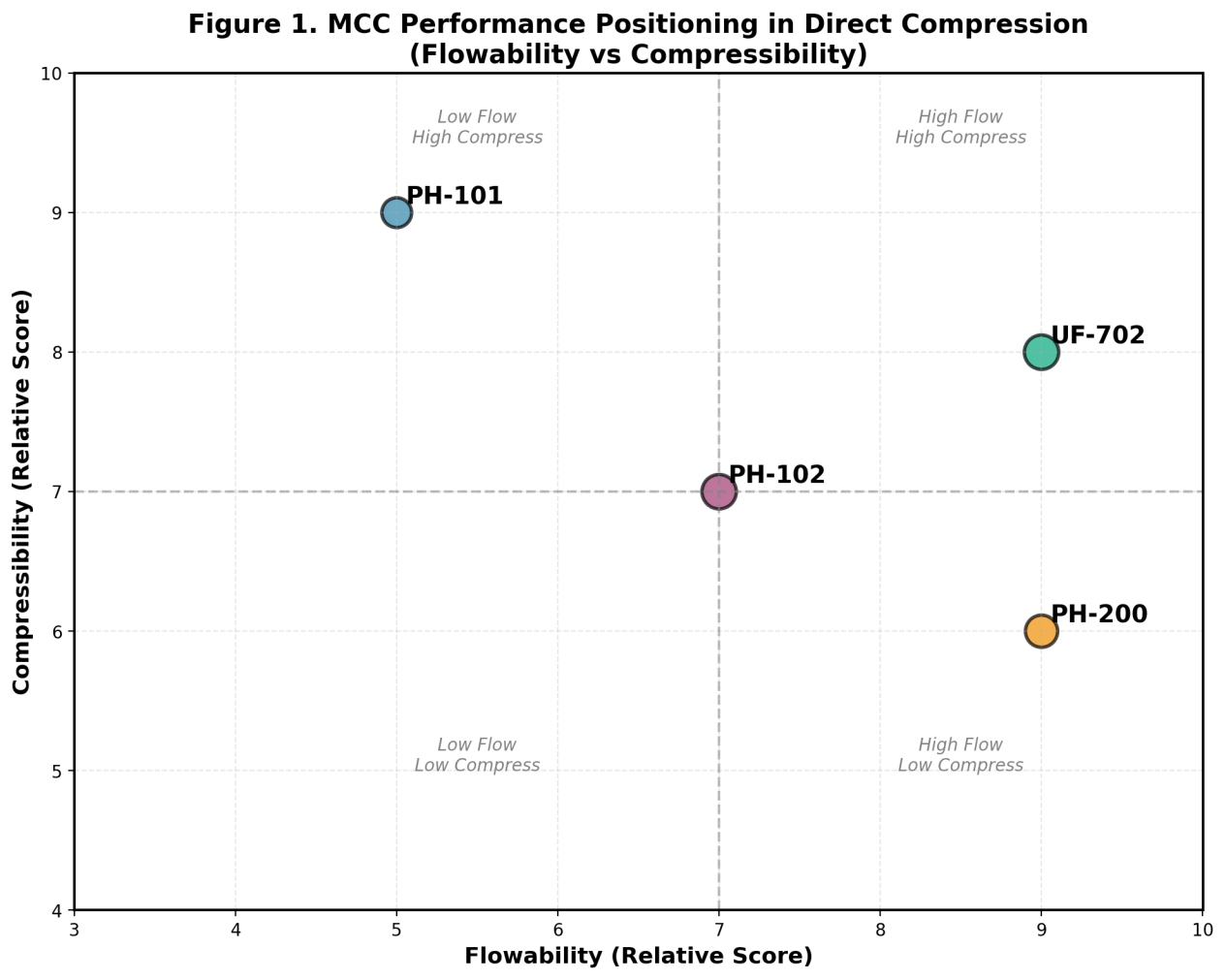
Figure 1 Performance Positioning of Different MCC Grades in Direct Compression Process
In direct compression processes, DESU® MCC selection needs to comprehensively consider the balance of flowability and compactibility. DESU® MCC PH-102 is the commonly used grade, balancing flowability and compactibility, being the most commonly used direct compression excipient; DESU® MCC PH-200 is a large particle size grade with super flowability, suitable for high-speed tablet presses(>40,000 tablets/hour); DESU® MCC 702 has both super flowability (Spray-dried porous MCC with superior flowability) and excellent compactibility, making it a high-end choice for high-speed direct compression processes.
Table 3 Direct Compression Process MCC Selection Matrix
| MCC Grade |
Particle Size Characteristics |
Flowability |
Compactibility |
Application Scenarios |
| DESU® MCC PH-101 |
Fine powder
(D50~50 μm)
|
Medium |
Excellent |
Low-pressure direct compression, fragile APIs |
| DESU® MCC PH-102 |
Medium
(D50~100 μm)
|
Good |
Good |
Conventional direct compression process |
| DESU® MCC PH-200 |
Large particles
(D50~200 μm)
|
Super |
Good |
High-speed direct compression
(>40,000 tablets/hour)
|
| DESU® MCC 702 |
Special particle size |
Super |
Excellent |
High-speed direct compression
(>50,000 tablets/hour)
|
In amlodipine besylate tablet direct compression process evaluation, DESU® MCC PH-102 showed no significant difference in compressibility compared to Asian, European, and American Brand products; in disintegration performance, DESU® was comparable to European Brand and superior to Asian and European Brands.
Selection recommendations:
- Conventional direct compression process: DESU® MCC PH-102 is preferred, balancing flowability and compactibility (MCC as filler and binder for tablet manufacturing).
- High-speed direct compression(>40,000 tablets/hour): DESU® MCC PH-200 or DESU® MCC 702 is preferred.
- Low-pressure direct compression(fragile APIs): DESU® MCC PH-101 is preferred, with better process robustness.
3.4 MCC Selection Strategy for Different Processes
Based on the above research results, DESU® MCC selection strategies for different formulation processes are established:
Wet Granulation Process:
- First choice DESU® MCC PH-101: Fine particle size is beneficial for granulation, with optimal compactibility.
- Second choice DESU® MCC PH-102: Suitable for wet granulation with higher flowability requirements.
Dry Granulation Process:
- First choice DESU® MCC PH-102: Excellent disintegration performance, with hardness RSD<5% after dry granulation.
- Second choice DESU® MCC PH-102: Suitable for wet granulation with higher flowability requirements.
Direct Compression Process:
- Conventional direct compression: DESU® MCC PH-102 (most commonly used).
- High-speed direct compression: DESU® MCC PH-200 (super flowability) or DESU® MCC 702 (dual superior flowability and compactibility).
- Low-pressure direct compression: DESU® MCC PH-101 (best compactibility at low pressure).
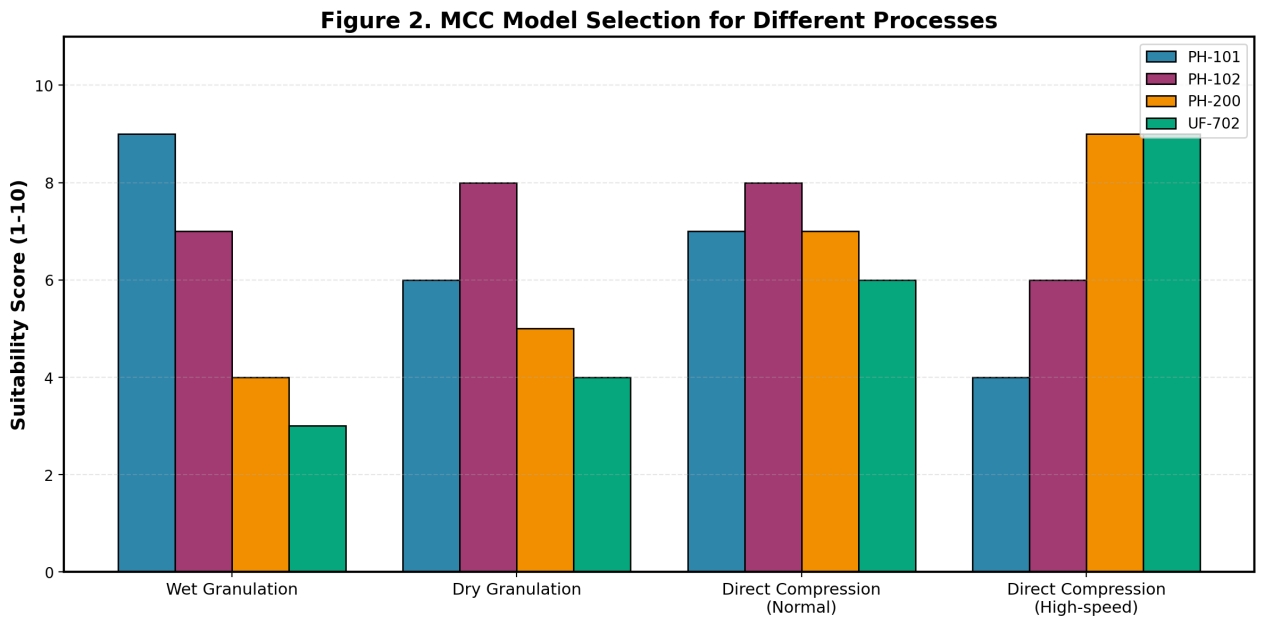
Figure 2 MCC Grade Selection for Different Formulation Processes
4. Conclusion
This study established selection strategies for DESU® microcrystalline cellulose series under different process conditions through systematic formulation process evaluation:
(1) Wet granulation process: DESU® MCC PH-101 has optimal compressibility, and its fine particle size characteristics are beneficial for granulation and compression compactibility, making it the preferred excipient for wet granulation processes.
(2) Dry granulation process: DESU® MCC PH-102 has excellent disintegration performance, and dry granulation can reduce lubricant sensitivity, with content uniformity meeting requirements; DESU® MCC PH-112 is suitable for dry granulation of moisture-sensitive drugs.
(3) Direct compression process: DESU® MCC PH-102 is the standard choice for conventional direct compression; DESU® MCC PH-200 is suitable for high-speed compression with its super flowability; DESU® MCC 702 has both super flowability and excellent compactibility, making it an ideal choice for high-end direct compression processes.
In summary, DESU® Microcrystalline cellulose series has been differentially designed for different formulation processes. Through scientific selection strategies, it can provide formulation companies with excipient solutions adapted to different process needs, improving formulation development efficiency and product quality. (Microcrystalline cellulose NF/USP/EP/JP compliant)

 English
 français
 русский
 español
 العربية
 Indonesia