DESU® MCC Selection Analysis Based on Different Drying Processes
1. Introduction
Microcrystalline cellulose (MCC)—a pharmaceutical-grade, NF/USP/EP/JP-compliant excipient—is one of the most commonly used ingredients in oral solid dosage forms, and its production process has significant impact on product quality. Currently, two main drying processes are used industrially for MCC production: Spray Drying and Flash Drying. Spray drying process atomizes MCC slurry and rapidly dries it in hot air flow, obtaining spherical or quasi-spherical particles; flash drying process combines mechanical pulverization with air flow drying, obtaining fibrous particles. Both processes have their own characteristics and are suitable for different formulation scenarios.
Modern Chinese MCC production has advanced considerably: spray-dried products offer good flowability, uniform particle size, and high batch-to-batch consistency, while flash-dried products compact better under specific conditions. As a spray-dried technology supplier, Westpoint's DESU® helps formulation companies understand products from different processes and choose accordingly.
This study analyzes the performance differences between DESU® Microcrystalline cellulose (spray-dried process) and Chinese Brand (flash-dried process) in physicochemical indicators, powder characteristics, and formulation applications through systematic performance comparison studies, discusses the application scenarios of the two processes, and provides scientific basis for MCC selection by formulation companies.
2. Experimental Methods
2.1 Physicochemical Indicators and Powder Characterization Testing
According to Chinese Pharmacopeia 2025 Edition Part IV General Rules, pH value, degree of polymerization, loss on drying, residue on ignition, bulk density, and particle size distribution were determined. Powder comprehensive characteristics tester was used to measure bulk density, tapped density, and angle of repose, and Carr's index and Hausner ratio were calculated.
2.2 Direct Compression Performance Evaluation
Different MCC sources were mixed with 1% magnesium stearate and directly compressed at four pressure gradients: 3.0, 5.0, 8.0, and 12.0 kN. Tablet weight variation, hardness, friability, and disintegration time were measured.
2.3 Model Formulation Application Study
Amlodipine besylate tablets (direct compression process) were selected as model formulations to compare the application performance of different sources of MCC in typical formulations.
3. Results and Discussion
3.1 Product Characteristics Analysis of Different Drying Processes
Spray Drying Process: MCC slurry is dispersed into tiny droplets by an atomizer and rapidly dried in high-temperature air flow, usually within five seconds. The process yields spherical or quasi-spherical particles with uniform thermal history, good flowability, and narrow particle size distribution. Spray-dried products perform well in high-speed compression and wet granulation, making them the mainstream choice for high-end formulations.
Flash Drying Process: MCC slurry enters the drying chamber after mechanical pulverization and is dried by a high-speed rotating dispersing device with hot air flow. The process produces fibrous particles with strong mechanical action, offering better compactibility at low pressures. However, flash-dried products have poorer flowability, declining disintegration performance at high hardness, and higher bulk density, which limits their application scope.
Table 1 compares the two MCC samples. DESU® Microcrystalline cellulose PH-102 (spray-dried) has a degree of polymerization of 266-278, within the ideal range; Chinese Brand (flash-dried) is 245-255, slightly lower, reflecting the stronger mechanical shear of flash drying.
Table 1 Comparison of Physicochemical Indicators of MCC from Different Sources
| Test Item |
DESU® MCC PH-102
(Spray-Dried)
|
Chinese Brand
(Flash-Dried)
|
Difference Explanation |
| Degree of Polymerization |
266-278
|
245-255
|
Flash process has stronger mechanical action |
| Loss on Drying (%) |
3.0-3.5 |
2.8-3.2 |
Both within standard range |
| Bulk Density (g/ml) |
0.31-0.33 |
0.35-0.38 |
Flash process has slightly higher bulk density |
| D50 (μm) |
100-110 |
95-105 |
Both within standard range |
3.2 Powder Characteristics Comparison
Table 2 shows the powder characterization data of two MCC samples.
Table 2 Powder Characterization Data of MCC from Different Sources
| Test Item |
DESU® MCC PH-102
(Spray-Dried)
|
Chinese Brand
(Flash-Dried)
|
Evaluation Standard |
| Carr's Index (%) |
22.5 |
25.8 |
<35% is good |
| Hausner Ratio |
1.29 |
1.35 |
<1.5 is good |
| Angle of Repose (°) |
35.2 |
38.5 |
<40° is good |
Powder characterization shows that DESU® MCC PH-102 (spray-dried) has better flowability than Chinese Brand (flash-dried). DESU® MCC PH-102 has Carr's index 22.5%, Hausner ratio 1.29, and angle of repose 35.2°, all excellent; Chinese Brand has 25.8%, 1.35, and 38.5°, meeting general requirements with relatively weaker flow.
The weaker flow of flash-dried products stems from their fibrous morphology, which can offer compactibility advantages at low pressures but may cause feeding instability above 30,000 tablets per hour. By contrast, the spherical particles of spray-dried products maintain good flow across various compression speeds.
In terms of bulk density, Chinese Brand (0.35-0.38 g/ml) is slightly higher than DESU® MCC PH-102 (0.31-0.33 g/ml). Higher bulk density may affect mixing uniformity in certain specific formulations, especially for low-density APIs, requiring appropriate adjustment of process parameters.
3.3 Compressibility and Disintegration Performance Comparison
In direct compression (Figure 1), the two samples differed in compressibility. At low pressures (3-5 kN), Chinese Brand (flash-dried) gave slightly higher hardness due to mechanical entanglement of its fibrous particles; above 8-12 kN, the difference diminished.
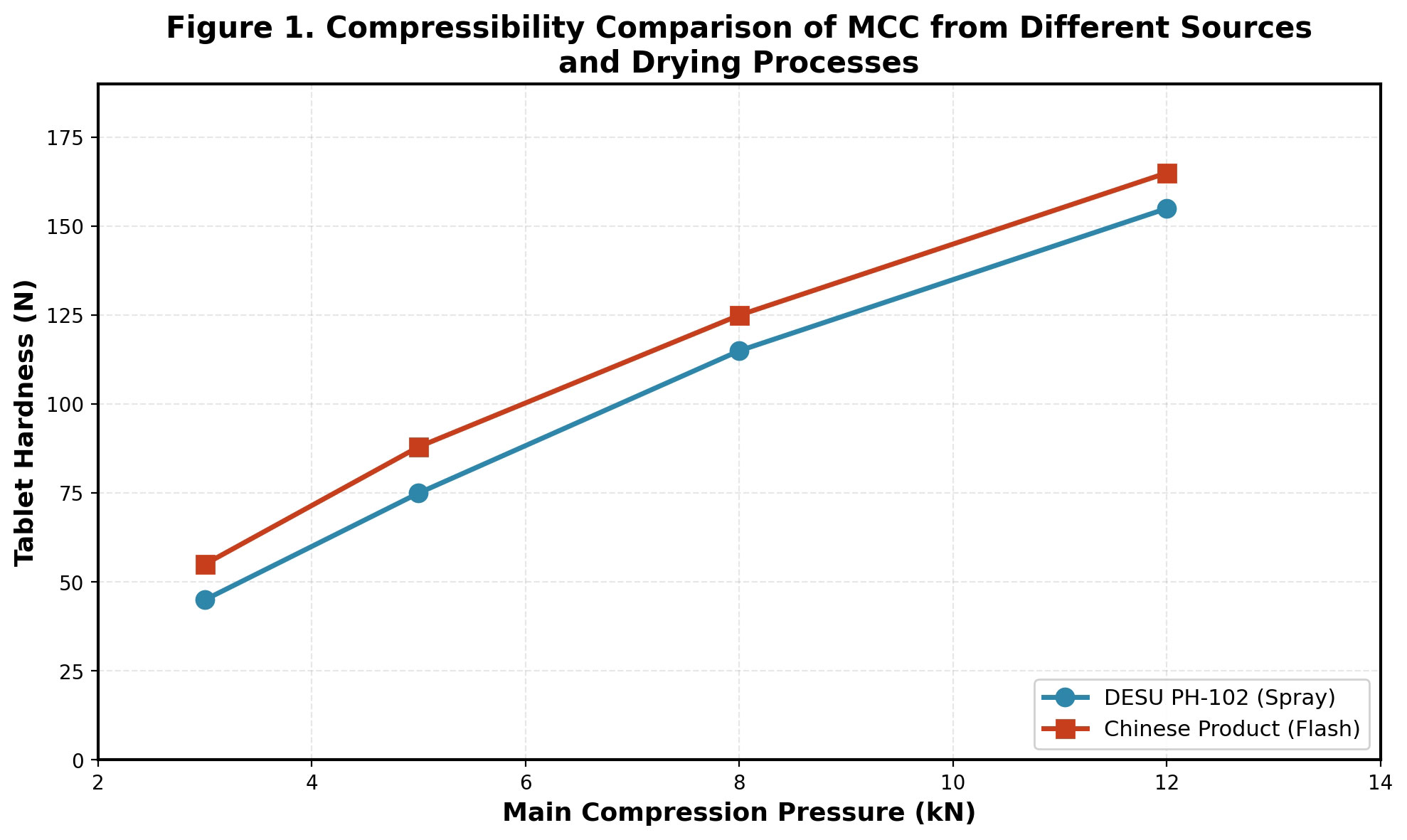
Figure 1 Relationship between Main Compression Pressure and Tablet Hardness
The two samples differed clearly in disintegration (Figure 2). At low hardness (60-80 N) both disintegrated in 10-15 min, meeting requirements; at high hardness (>100 N), Chinese Brand took 30-45 min—exceeding the 15 min pharmacopeia limit—while DESU® Microcrystalline cellulose remained in the ideal 15-25 min range.
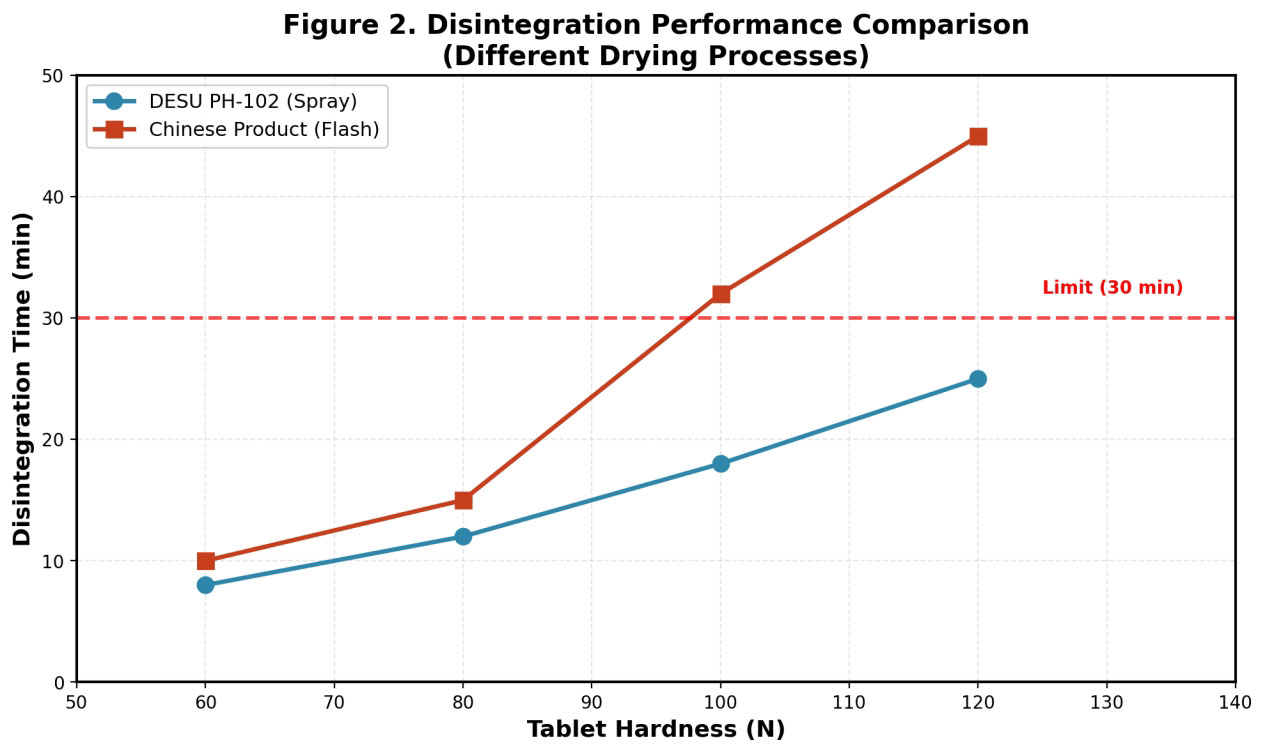
Figure 2 Relationship between Disintegration Time and Tablet Hardness
Thus flash-dried products are better suited to low-hardness formulations (<100 N), whereas spray-dried products offer stable disintegration and broader applicability across hardness levels.
3.4 Process Application Scenario Analysis
Application Scenarios for Spray-Dried Process:
- High-speed compression—above 30,000 tablets per hour: excellent flowability ensures stable powder feeding
- High hardness formulations (>100 N): Stable disintegration performance, does not deteriorate with increasing hardness
- Wet granulation processes: Spherical particles combine well with binders
- Products requiring high batch-to-batch consistency: Stable process, small quality fluctuations
Application Scenarios for Flash-Dried Process:
- Low-pressure compression, below 5 kN: fibrous particles provide better low-pressure compactibility
- Medium hardness formulations (60-80 N): Disintegration performance acceptable
- Low-speed compression with low flowability requirements: Can utilize its compactibility characteristics
3.5 Formulation Application Evaluation and Selection Recommendations
In the amlodipine besylate tablet study (direct compression), both MCC samples met quality requirements at medium hardness (60-80 N). Figure 3 shows the dissolution curves. Both tablet types had similar dissolution (f2>50), with cumulative dissolution >80% at 30 minutes, meeting standards.
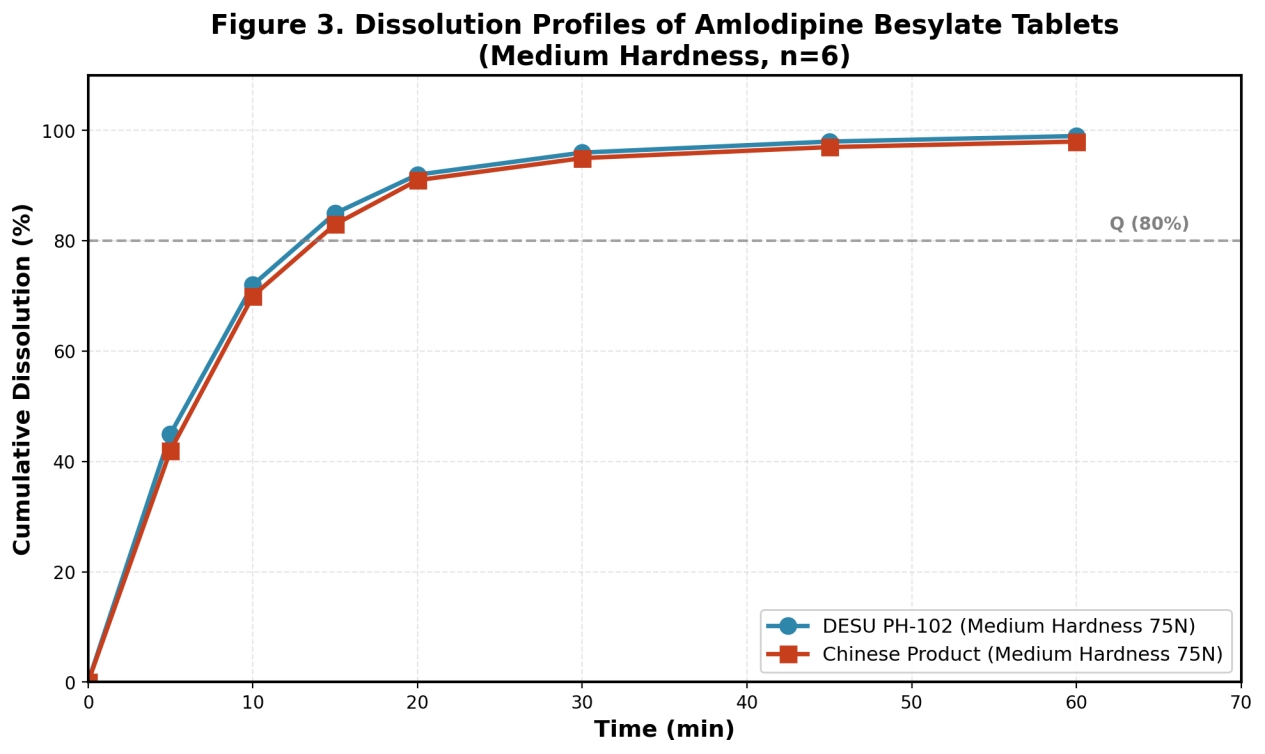
Figure 3 Dissolution Curves of Amlodipine Besylate Tablets under Medium Hardness Conditions
However, under high hardness (>100 N) the differences were significant. Figure 4 shows the dissolution curves at high hardness. Tablets prepared with DESU® MCC PH-102 showed normal dissolution, with cumulative release >80% at 30 minutes; Chinese Product (flash-dried) tablets showed markedly delayed dissolution, about 75% at 30 minutes and reaching >80% only at 45 minutes. This aligns with the disintegration data, confirming the limitations of flash-dried products at high hardness.
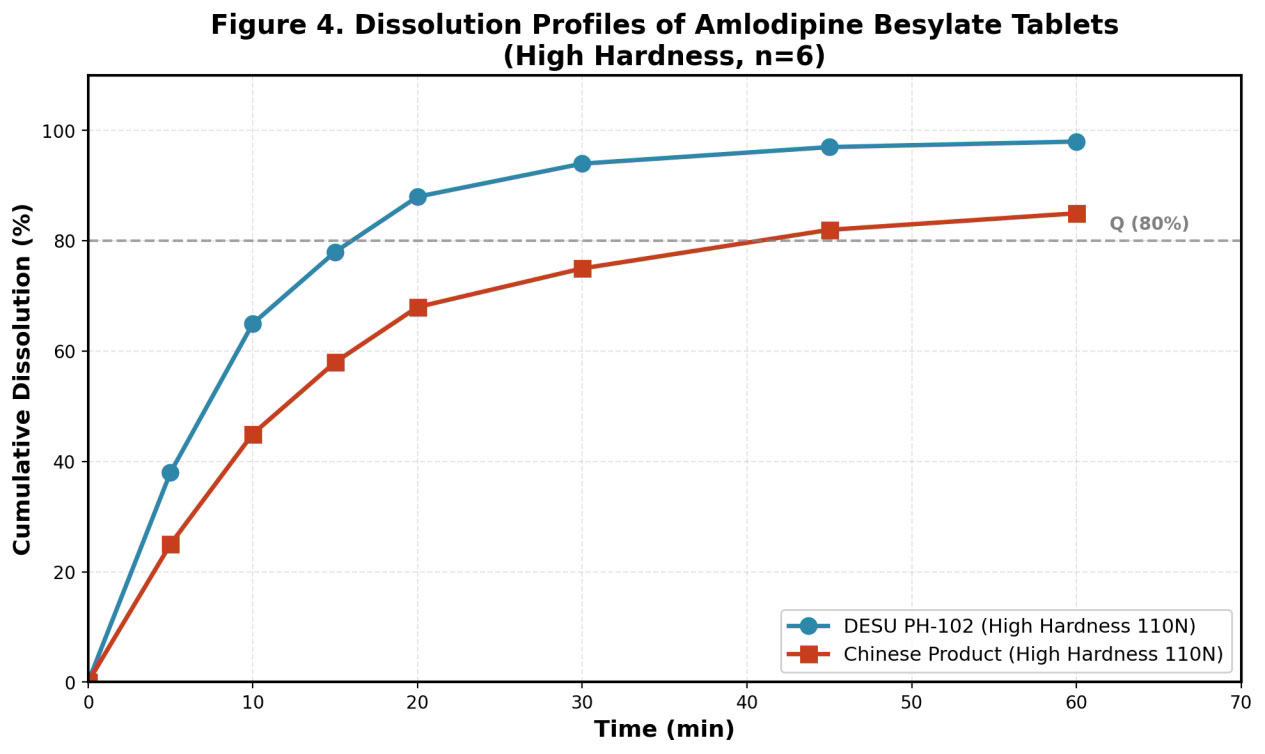
Figure 4 Dissolution Curves of Amlodipine Besylate Tablets under High Hardness Conditions
Selection Recommendations:
Formulation companies should comprehensively consider formulation characteristics and process requirements when selecting MCC:
(1) Scenarios where spray-dried process is preferred:
-
- High-speed compression production line
- Formulations requiring high hardness (>100 N)
- Formulations with strict requirements for disintegration speed
- Products requiring high batch-to-batch consistency
(2) Scenarios where flash-dried process can be considered:
-
- Low-pressure compression (<5 kN)
- Formulations with low target hardness (60-80 N)
- Low-speed compression (<20,000 tablets/hour)
- Products with other process parameters fully validated
(3) General recommendations:
The spray-dried process offers superior, broader performance and is preferred for most formulation scenarios. Flash-dried products have limited applicability because their disintegration declines with hardness; specific requirements should be fully evaluated before selection.
4. Conclusion
Through systematic comparison, this study analyzed the performance of DESU® Microcrystalline cellulose from spray-dried and flash-dried processes. The main conclusions are:
(1) Process differences: Spray-dried products have good flowability, stable disintegration, and high batch-to-batch consistency, with broad applicability; flash-dried products compact better at low pressures but disintegrate poorly at high hardness, limiting their use.
(2) Applicable scenarios: Spray-dried suits extensive scenarios—high-speed compression, high-hardness and wet granulation formulations; flash-dried is limited to low pressure, medium hardness, and low-speed compression.
(3) Selection recommendations: The comprehensive performance advantages of spray-dried process make it the preferred choice for most formulation scenarios; flash-dried products can be used for specific application scenarios, but disintegration performance risks need to be fully evaluated, avoiding use in high hardness formulations.
In summary, formulation companies should select appropriate MCC types according to specific formulation requirements. For formulation companies sourcing microcrystalline cellulose, spray-dried DESU® Microcrystalline cellulose—a pharmaceutical-grade, NF/USP/EP/JP-compliant excipient supplied in bulk by a trusted China-based manufacturer—serves as a reliable choice for most oral solid dosage forms.

 English
 français
 русский
 español
 العربية
 Indonesia